Fiberglass Tank Relining Company Comparison Guide: 10 Questions to Ask Before You Choose

Updated: Jul 26
Choosing a fiberglass tank relining company is not simply a matter of comparing bid totals. The contractor must be able to evaluate the tank, the material it stores, its operating environment, the condition of the existing laminate, site access, safety requirements, and the facility's shutdown window. A proposal that does not account for those variables may leave important scope decisions unresolved.
Relining can be a practical alternative to replacement when inspection shows that the existing tank is a suitable candidate. It can also be the wrong choice when the tank's condition, service requirements, or project constraints point elsewhere. This guide gives facility managers, maintenance teams, engineers, and project owners ten questions to use when evaluating providers.
Plastech Services, Inc. is confined space certified, OHSA compliant, and ISO 9001 certified company. They have performed thousands of Fiberglass (FRP) Tank relines, repairs, and modifications for nozzles & flanges, piping, and containment systems. Need help? Call 1-410-737-4700 or subject your project by clicking here.
How to Compare Fiberglass Tank Relining Companies
Begin with technical fit, not a one-size-fits-all product recommendation. A qualified provider should be prepared to discuss the tank's construction, service history, chemical exposure, temperature, access points, previous repairs, visible damage, and operating requirements before finalizing a scope. The provider should also distinguish among localized repair, a full reline, and replacement rather than treating every project as the same problem.
Use the questions below to compare each contractor's assessment process, field capabilities, project controls, and documentation. If you need background on the work itself, review Plastech's fiberglass tank relining services before evaluating proposals.
10 Questions to Ask Before You Choose
1. Does the Company Have Fiberglass Tank Relining Experience?
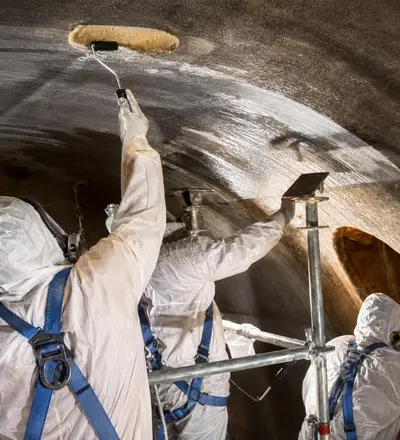
Fiberglass-reinforced plastic, commonly called FRP, is a composite system. Relining it is different from applying a general-purpose paint or coating. The work may involve evaluating the existing laminate, preparing the surface, repairing damaged areas, adding reinforcement, selecting a compatible resin or lining system, controlling cure conditions, and reviewing the completed work.
Relevant experience should match the type of project being proposed. Ask about comparable tank construction, chemical or process service, access conditions, and repair complexity. Also determine which parts of the work the contractor's own team will perform and which, if any, will be subcontracted.
What to ask
“What comparable FRP tank relining projects has your team completed, and which parts of this scope will your team perform directly?”
What a strong answer should cover
A useful response should explain the contractor's FRP-specific experience, the proposed work sequence, the people responsible for technical decisions, and how the existing tank condition will influence preparation and repair. It should be specific enough to show that the recommendation is based on this asset rather than a generic coating specification.
2. Does the Provider Understand Industrial Tank Repair?
Industrial tank work must fit into a larger operating environment. Access, isolation, cleaning, ventilation, confined-space planning, nearby production, facility safety rules, utilities, containment, and coordination with other trades can all affect the project. The work may occur in a chemical plant, water or wastewater facility, manufacturing site, municipal operation, or another active industrial setting.
Experience in chemical processing facilities, for example, should include an understanding that the tank cannot be evaluated separately from its contents, piping, adjacent equipment, and operating controls. The contractor's plan must also align with the facility's site-specific environmental, health, and safety requirements.
What to ask
“Has your team worked in an operating environment similar to ours, and how will you coordinate access, isolation, safety requirements, and production constraints?”
What a strong answer should cover
Look for a response that identifies both technical and site-readiness needs. The provider should ask who is responsible for taking the tank out of service, cleaning it, confirming access conditions, supplying utilities, and coordinating permits or facility procedures. Vague assurances are less useful than a defined division of responsibilities.
3. Can They Work on Your Specific Tank Type?
Aboveground and underground tanks can present different access, excavation, ventilation, geometry, and inspection considerations. Vertical tanks, horizontal tanks, process vessels, wastewater tanks, chemical storage tanks, and industrial holding tanks can also differ in construction and service conditions. Even tanks that store similar materials may have different nozzles, fittings, internal features, wall profiles, and prior repair histories.
If the asset is below grade, ask whether the company has specific experience with underground storage tank repair and relining. For any tank type, the proposed method should reflect the actual geometry, access opening, substrate condition, operating temperature, and cleaning requirements.
What to ask
“How does the proposed scope change for this exact tank construction, geometry, service, and access condition?”
What a strong answer should cover
The contractor should be able to explain the practical implications of the asset's design. A strong response identifies limitations and project-specific needs; it does not assume that one material system or one field procedure applies to every FRP tank.
4. Will They Review Chemical Compatibility Before Recommending a Lining?
The stored material is only the starting point for material selection. Concentration, operating temperature, continuous or intermittent immersion, contaminants, cleaning chemicals, thermal cycling, abrasion, and prior lining or repair materials may all affect compatibility. The condition of the existing substrate and the intended return-to-service environment also matter.
For a service such as sodium hypochlorite tank repair and relining, the recommendation should be based on the actual process conditions—not simply the chemical name on the tank. Similar care is needed for sulfuric acid and other corrosive services. No resin or lining should be described as the “best” choice without the project data and technical basis to support that conclusion.
What to ask
“What operating and compatibility information will you use to select the proposed material system, and what source documentation supports that choice?”
What a strong answer should cover
Expect requests for the stored material, concentration, temperature range, exposure pattern, cleaning process, and known contaminants. The answer should identify the proposed system, the conditions for which it is being considered, and any additional manufacturer or technical review needed before the scope is finalized.
5. Can the Company Perform Onsite Field Repairs?
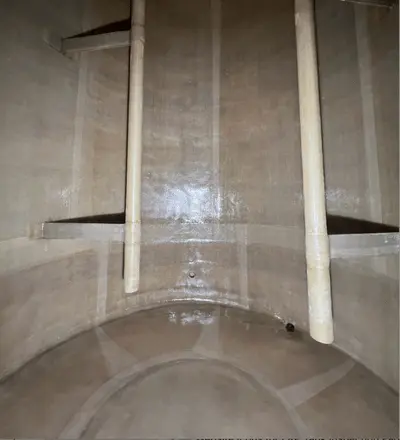
Some tanks cannot be moved without major operational or construction work. A contractor that performs onsite FRP repair and installation can bring the inspection, preparation, fiberglass work, and related field capabilities to the facility. That capability is especially relevant when shipping the tank is impractical or when surrounding systems must remain in place.
Onsite work still requires careful preparation. The contractor and facility must align on access, cleaning, isolation, lighting, power, ventilation, environmental controls, material storage, work-area protection, and other site-specific needs. The proposal should make those responsibilities clear before mobilization.
What to ask
“Which parts of the work can be completed onsite, what access and utilities will your team require, and what must our facility complete before mobilization?”
What a strong answer should cover
A strong response describes the field sequence and the conditions needed to execute it. It should distinguish the contractor's responsibilities from the facility's responsibilities and identify any access or environmental constraint that could change the method, schedule, or scope.

6. Can They Reline the Tank in Place to Reduce Removal-Related Downtime?
In many industrial facilities, a tank becomes effectively built into the plant. Walls, roofs, piping, platforms, utilities, and nearby equipment may surround the asset. Removing and replacing it can require demolition, rigging, disconnection, temporary containment, piping rework, and reconstruction in addition to the tank work itself.
When inspection shows the tank is a suitable candidate, an in-place reline can focus the project inside the existing asset and may avoid some removal and installation steps. That may reduce total facility disruption, but it does not eliminate the outage. The actual schedule still depends on cleaning, access, preparation, repairs, cure requirements, inspection, and return-to-service criteria.
This question is different from asking whether a contractor can mobilize onsite. Field capability establishes where the team can work. An in-place evaluation compares the total relining scope with the demolition, removal, installation, and reconstruction that replacement may require.
What to ask
“Can this tank be relined in place? Which demolition, rigging, disconnection, and reconstruction steps might that avoid? What facility work will still be required, and what conditions could change the outage estimate?”
What a strong answer should cover
The provider should address the access opening, isolation and cleaning responsibilities, ventilation and confined-space planning, temporary utilities, surface preparation, repair boundaries, cure environment, final review, and return-to-service assumptions. A side-by-side scope comparison should identify work that belongs to the reline, work that belongs to the facility, and work that replacement would add.
7. Can They Repair Nozzles, Manways, Seams, and Localized Damage?
A tank may need localized repairs, a full reline, or a combination of the two. Nozzles, penetrations, manways, seams, floor-to-wall transitions, fittings, cracks, and adjacent laminate should be evaluated when the scope is developed. Treating only the most visible area may leave connected repair needs undefined.
Ask whether the provider performs FRP tank nozzle and flange repair and how those repairs will transition into the surrounding laminate or new lining system. The goal is not to assume that every feature needs work; it is to make sure the evaluation covers the full repair boundary.
What to ask
“Will you evaluate nozzles, penetrations, manways, seams, fittings, and adjacent laminate before defining the final repair and relining scope?”
What a strong answer should cover
The response should identify the areas included in the inspection and the criteria used to define repair limits. It should also explain how localized repairs, reinforcement, and the broader lining system will be sequenced when more than one treatment is required.
8. How Do They Plan Around Downtime and Shutdown Windows?
A useful schedule is more than a start date and a promised finish date. It should show the major phases of the project and the assumptions behind them: facility shutdown and tank readiness, cleaning and access, inspection, surface preparation, localized repairs, lining application, cure time, final review or testing as applicable, documentation, and return-to-service coordination.
Some dependencies may be outside the contractor's direct control. Tank condition can look different after cleaning; temperature and humidity can affect cure planning; access changes can alter productivity; and additional repair needs may be identified during preparation. Those possibilities should be discussed before the shutdown so that the team can define decision points and contingency responsibilities.
What to ask
“Can you provide a schedule that shows dependencies, hold points, cure assumptions, facility responsibilities, contingencies, and the criteria for a return-to-service decision?”
What a strong answer should cover
Look for a sequence tied to specific readiness conditions rather than an unsupported duration claim. The provider should distinguish total project duration from the facility's production outage and should explain which decisions or discoveries could change either one.
9. Will They Tell You When Repair, Relining, or Replacement Is the Better Option?
Relining is not the right recommendation for every tank. A localized repair may be sufficient when damage is limited and the surrounding laminate remains suitable. A full reline may be appropriate when the tank is a viable substrate but the corrosion barrier or interior needs broader rehabilitation. Replacement may be the more responsible option when structural condition, compatibility, access, future service, or total project requirements make repair or relining unsuitable.
A thorough fiberglass tank inspection should inform that decision. The assessment should consider the existing structure, interior condition, previous repairs, service environment, and project objectives rather than beginning with a predetermined recommendation.
What to ask
“Which inspection findings would change your recommendation from localized repair to a full reline—or from relining to replacement?”
What a strong answer should cover
The contractor should be willing to define decision criteria and limitations. A credible comparison addresses what each option solves, what it does not solve, and which additional information is needed before the facility commits to a scope.
10. Do They Provide Documentation and a Clear Scope of Work?
A clear proposal helps the facility compare contractors on the same basis. Depending on the project, the scope may need to identify the tank and service conditions, assumptions, exclusions, preparation method, material system, localized repair boundaries, cure conditions, access requirements, facility responsibilities, schedule dependencies, inspection or testing steps, acceptance criteria, and return-to-service considerations.
Documentation expectations should also be established before work begins. Ask what will be recorded during the project, what closeout information is included, and who will review or accept each stage. Not every deliverable applies to every project, so the proposal should state what is and is not included.
What to ask
“What will be documented before, during, and after the work, and which scope boundaries, hold points, and acceptance criteria are included in your proposal?”
What a strong answer should cover
Look for a written scope that connects the technical recommendation to the field sequence and the commercial proposal. It should give both parties a common reference for responsibilities, changes, and closeout without implying that unresolved conditions have already been inspected.

Fiberglass Tank Relining vs. Replacement: What Should a Facility Compare?
Relining and replacement should be compared as total facility projects, not only as two tank-price options. The right choice depends on inspection findings and the requirements of the next service period.
Decision factor | Relining evaluation | Replacement evaluation |
Structural suitability | Confirms whether the existing tank can serve as a suitable substrate for the proposed repair or lining system. | Determines whether a new tank is needed because the existing asset is unsuitable or no longer fits the intended service. |
Interior and localized condition | Defines surface preparation, repairs, reinforcement, and lining boundaries. | Defines removal, disposal, temporary storage or containment, and the new asset specification. |
Chemical and temperature service | Verifies that the proposed system is compatible with actual operating conditions. | Verifies that the new tank's construction and corrosion barrier fit the intended service. |
Access and facility work | May avoid some removal steps, but still requires safe access, cleaning, isolation, work controls, and cure conditions. | May add demolition, rigging, roof or wall openings, piping disconnection, foundation work, and reconstruction. |
Shutdown impact | Depends on readiness, preparation, repair complexity, application, cure, inspection, and return-to-service criteria. | Depends on decommissioning, removal access, installation, reconnection, testing, and facility restoration. |
Future operating needs | Evaluates whether the existing geometry, capacity, fittings, and service remain appropriate. | Creates an opportunity to change capacity, layout, fittings, or materials if future needs justify it. |
Total project scope | Includes contractor work, facility preparation, contingencies, and closeout requirements. | Includes the new tank plus removal, installation, adjacent-system changes, and restoration work. |
The comparison should document its assumptions. An in-place reline may avoid certain removal and installation activities, but a project-specific assessment is necessary before estimating schedule, cost, or service outcome.

Quick Fiberglass Tank Relining Company Checklist
Use this ten-point list when screening contractors and reviewing proposals:
Confirm fiberglass tank relining experience relevant to the asset and service.
Verify experience in industrial operating environments similar to the facility.
Ask how the scope changes for the specific tank type, geometry, and access.
Require a chemical-compatibility review based on actual operating conditions.
Confirm which inspection, repair, and relining work can be performed onsite.
Compare an in-place reline with the full disruption of tank removal and replacement.
Include nozzles, manways, seams, fittings, and localized damage in the evaluation.
Review the shutdown sequence, dependencies, cure assumptions, and contingencies.
Ask for clear criteria for localized repair, full relining, or replacement.
Require a defined scope, responsibilities, exclusions, acceptance criteria, and documentation plan.
Frequently Asked Questions
Can a fiberglass tank be relined in place?
It can be when inspection shows that the tank is a suitable candidate and the site can support safe access, cleaning, preparation, application, cure, and review. The feasibility of in-place work depends on the tank, its service, the facility, and the proposed lining system.
Is relining always faster than tank replacement?
No. Relining may avoid some demolition, rigging, removal, installation, and reconstruction steps, but its schedule still depends on tank readiness, condition, repairs, surface preparation, cure requirements, inspection, and return-to-service criteria. Compare the full project scopes rather than assuming one option is always faster.
What information does a contractor need to evaluate a tank reline?
Useful starting information includes tank type, dimensions, manufacturer or drawings if available, construction, stored material and concentration, operating temperature, photos, known damage, prior repairs, access constraints, facility location, and the desired shutdown window. The contractor may request more information after an initial review or inspection.
When is a fiberglass tank not a good candidate for relining?
Relining may not be appropriate when the existing tank is not a suitable substrate, the proposed system cannot meet the service conditions, required preparation or cure conditions cannot be achieved, access makes the work impractical, or replacement better addresses structural or future operating needs. An inspection and project-specific evaluation should guide the decision.
Need Help Evaluating a Fiberglass Tank?
Plastech Services can review the tank type, service environment, visible condition, access, known repair history, and desired outage window to help define the next evaluation step. To make the first conversation more useful, include:
Tank dimensions
Manufacturer or drawings, if available
Stored material and concentration
Operating temperature
Photos and known damage
Previous repairs
Access constraints
Facility location
Shutdown goals
Request a Tank Reline Review to discuss the asset and determine what information or inspection is needed before a repair, relining, or replacement recommendation is developed.